
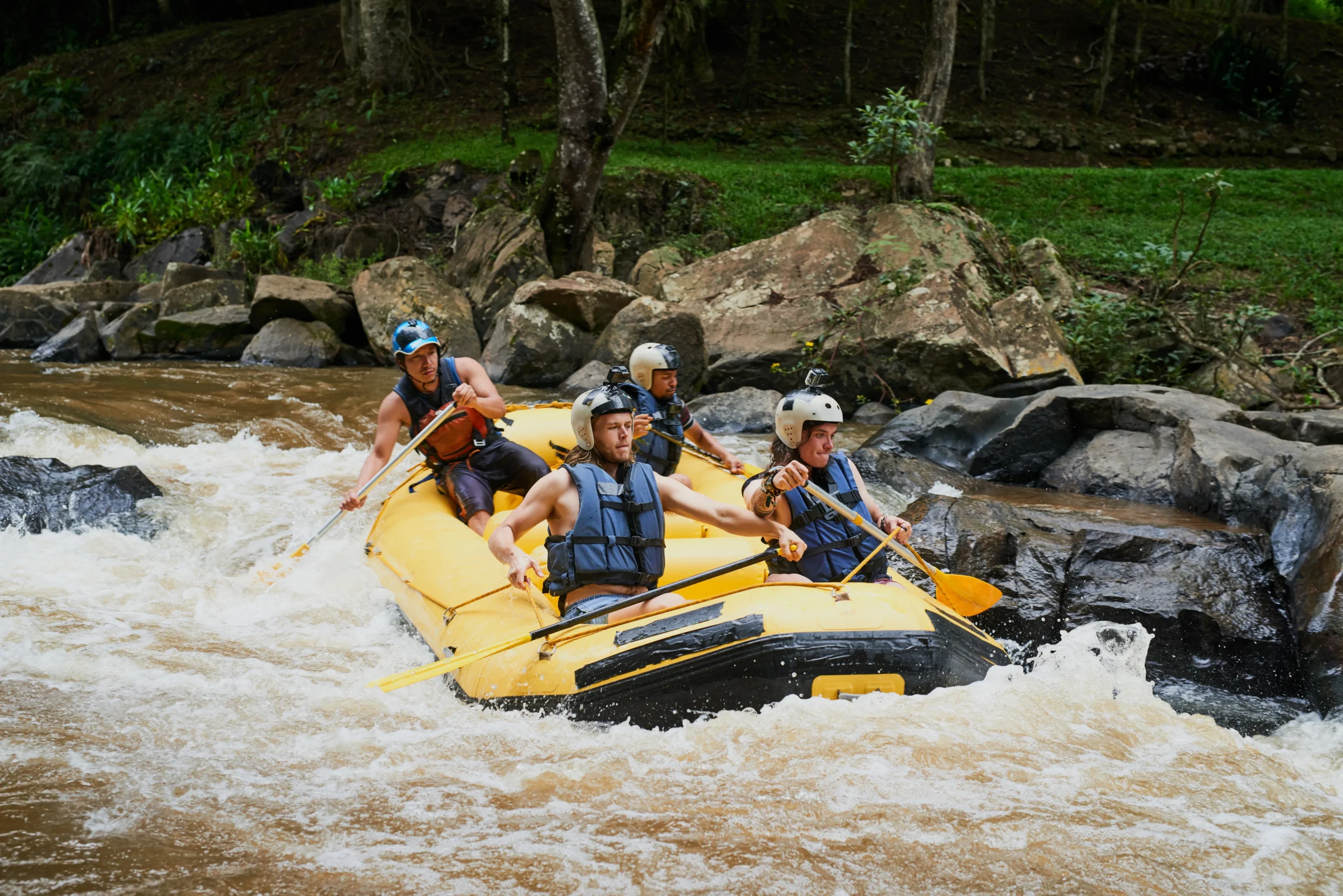
The Rishikesh rafting season is open again. Commercial rafting on the Ganga restarted on 24 September 2026 after the monsoon shutdown, with the season launch held a day earlier at Shivpuri by the Uttarakhand Tourism Development Board. For the next nine months the river sits in its most reliable window, and no two months on it feel the same.
This guide covers when the season opens and closes, which months give you the best water levels, how the main stretches compare on distance and rapid grade, what the new rates and licensing rules mean for your booking, and what to check before you pay. If this is your first run on the Ganga, read the stretch comparison first. Picking the wrong stretch is the most common mistake beginners make.
When Does the Rishikesh Rafting Season Open and Close?
The Rishikesh rafting season runs from late September to 30 June. Rafting stays suspended through July, August and most of September, because monsoon rain pushes the Ganga well past safe operating levels.
The reopening date is not fixed to a calendar day. Before operations restart, the tourism department sends a technical team down the river to assess conditions and certify it safe. That inspection is why the date shifts each year: the 2025-26 season opened on 27 September after a long monsoon, three days later than this one.
Rafting has also resumed on the Kali, Tons, Alaknanda, Pindar, Saryu and Bhagirathi, though the Ganga around Rishikesh remains the state’s busiest corridor, with roughly 3.8 lakh rafters last season.
Closing is more predictable. Operations end on 30 June, before the monsoon arrives in force.
Best Months for Rafting in Rishikesh: Water Levels Month by Month
Water level changes everything: how fast the rapids come, how cold you get, and how much the river carries you versus how hard you paddle.
| Period | Water level | What it means on the raft |
| Late September | High and silty, dropping | Big volume, fast rides. Longer stretches open in phases. |
| October | Strong but settled, clearing | Peak month. Warm air, big rapids, all stretches running. |
| November | Moderate, clear green water | Excellent visibility, comfortable temperatures, fewer crowds. |
| December to February | Low and very clear, cold | Technical, punchy rapids. Air can drop below 10°C. |
| March to April | Low to moderate, warming | Friendliest window for nervous first timers and families. |
| May to June | Rising with snowmelt | Volume returns, heat builds. Book early morning slots. |
If you want a single answer: October and November are the strongest months. The silt has cleared, the river still carries post-monsoon volume, and daytime temperatures are comfortable enough that you are not shivering between rapids. Choose March to April instead if you are bringing children or nervous swimmers. For how rafting fits alongside everything else in the state, see our month-by-month guide to the best time to visit Uttarakhand.
Rafting Stretches and Rapid Grades: Which One Suits You
Operators run four main day stretches, all finishing near Rishikesh. Distances vary slightly depending on the exit point used.
| Stretch | Distance | Grade | Time on river | Best for |
| Brahmapuri | Around 9 km | I to II | 1.5 hours | Children, families, absolute beginners |
| Shivpuri | Around 16 km | II to III | 2.5 to 3 hours | First timers wanting real whitewater |
| Marine Drive | 24 to 26 km | III | 4 to 5 hours | Repeat rafters with decent fitness |
| Kaudiyala | 34 to 36 km | III to IV | Full day | Experienced rafters only |
The Shivpuri run is what most people mean when they say they went rafting in Rishikesh. It takes in Roller Coaster, Golf Course, Club House and Double Trouble, with calm pools between where guides usually allow body surfing. Longer stretches add Return to Sender, Three Blind Mice and Cross Fire, while Kaudiyala includes Daniel’s Dip and The Wall, rated among the most demanding commercially rafted rapids in India.
Grades are not fixed. A rapid graded III in November can behave closer to IV in late September when volume is high, and a stretch that ran yesterday may be restricted today. If you are weighing rafting against treks or camping, our beginner’s guide to adventure tours in Uttarakhand compares them on difficulty and season.
What Is New in the 2026-27 Season
This season came with a tighter regulatory package worth knowing as a customer.
A new official rate list. Rates run from ₹1,000 to ₹3,500 per person depending on the route. The cheapest is the Phool Chatti or Kharasrot run to NIM Beach, and the longest, Kaudiyala to NIM Beach, is fixed at ₹3,500. Quotes far below the official floor are a warning sign, not a bargain.
Licensing under the 2014 rules. Registered firms received temporary permits valid for 45 days from 23 September, issued under the Uttarakhand River Rafting and Kayaking Rules 2014, with permanent licences to follow. Ask to see the licence.
Better trained guides. Wilderness First Aid and CPR training with the Hanifl Centre and Aerie Backcountry Medicine will cover roughly 700 guides in phases. A tourist guide portal now issues digital certificates and IDs, and more than 300 river guides have registered. Current advisories are published by Uttarakhand Tourism.
Infrastructure spending. A ₹100 crore first phase is underway for parking, changing rooms and briefing rooms at rafting points.
Safety Rules, Age Limits and Fitness Requirements
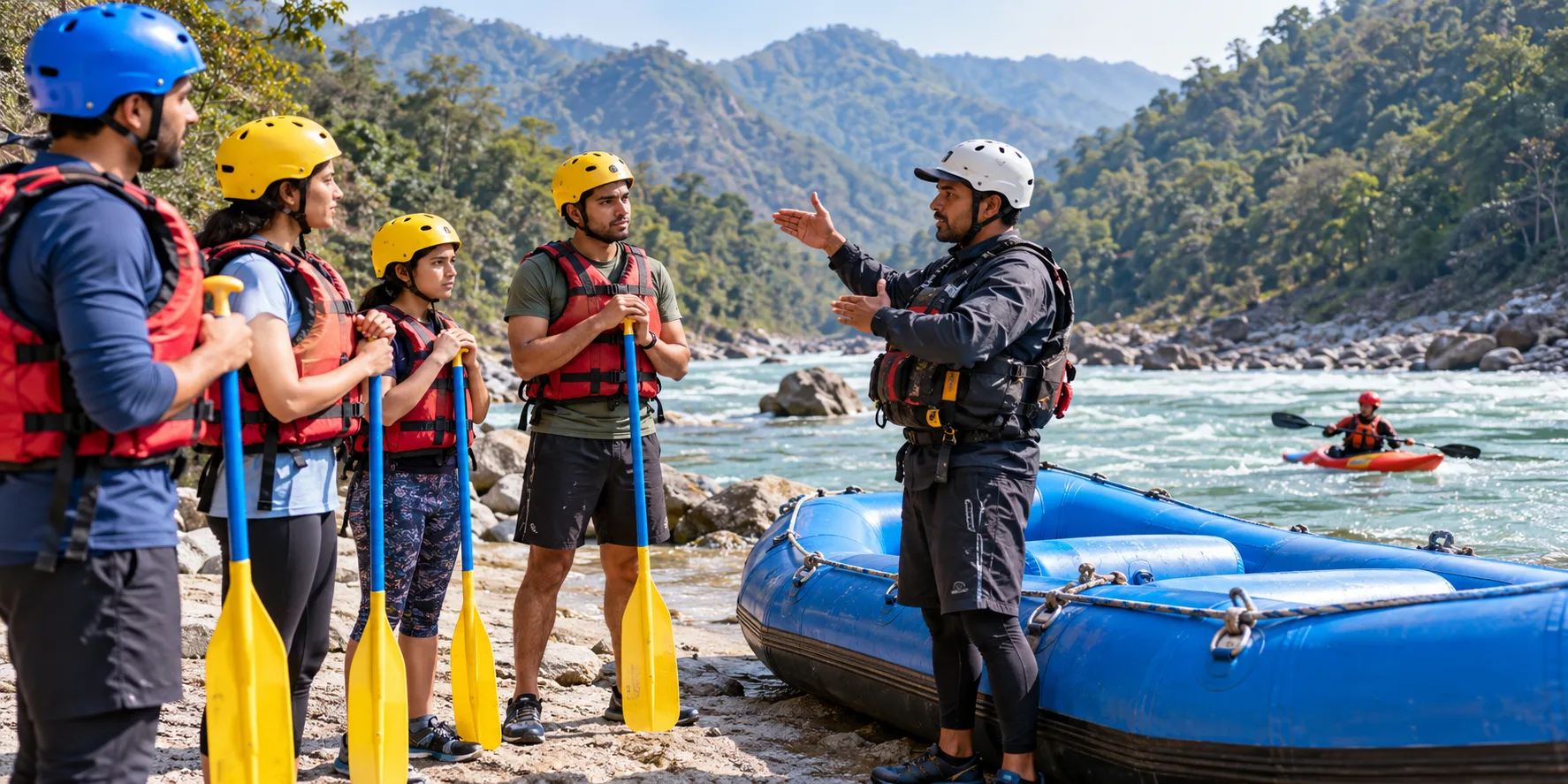
You do not need to know how to swim. Every participant wears a life jacket and helmet for the entire run, a certified guide steers the raft, and safety kayakers accompany groups on the busier stretches.
Age limits depend on the stretch and the operator. Most run the beginner stretch from age 12, while longer and higher grade stretches typically start at 14. Confirm the limit when you book rather than on the riverbank.
A few rules that are not negotiable with any reputable operator:
- The safety briefing is compulsory, and you follow the guide’s paddle commands without argument.
- Helmet and life jacket stay fastened from launch to exit.
- No alcohol before or during the run.
- Declare heart conditions, spinal injuries, pregnancy, asthma or recent surgery in advance.
- Wear secure footwear that will not come off, and leave your phone in the dry bag.
- A guide can refuse participation on safety grounds, and that call is final.
Basic fitness covers the 9 km and 16 km runs. Longer stretches demand real endurance. Check the IMD forecast the night before, since rain upstream changes conditions quickly.
How to Book Rafting in Rishikesh: What to Check Before You Pay
Rishikesh has hundreds of operators and quality varies sharply. Work through this list before paying an advance:
- Check the licence. Ask for registration under the 2014 rules. Any legitimate operator will show it.
- Confirm what the rate covers. Transport to the start point, equipment, guide and the return drive should be stated. Photos are usually charged separately.
- Match the stretch to your group. Do not let anyone upsell a 26 km run to a family with young children.
- Book the morning slot. Water conditions and light are better, and you avoid queues at the launch point.
- Ask about the weather policy. Find out what happens to your money if conditions force a cancellation.
- Combine it properly. Our Rishikesh adventure packages bundle the 16 km run with two nights of beach camping and a bonfire.
Book two to three weeks ahead for October weekends, Diwali week and New Year, when camps around Shivpuri fill completely.
Frequently Asked Questions
When does rafting season start in Rishikesh?
The season starts in late September, once the tourism department inspects the river and certifies it safe. The 2026-27 season opened on 24 September 2026. The previous season opened on 27 September 2025. Rafting then runs continuously until 30 June.
Is rafting safe in Rishikesh during monsoon?
No, and it is not permitted. Commercial rafting is suspended through July, August and most of September because the Ganga runs too high and fast for safe operation. Any operator offering monsoon rafting during the official shutdown is operating illegally.
Which month has the best rapids in Rishikesh?
October offers the best combination of strong post-monsoon volume, clear water and comfortable weather. Late September delivers higher volume and faster rides, though some longer stretches open in phases as levels drop. November is the best choice for clear views and smaller crowds.
How much does rafting in Rishikesh cost in 2026?
Official rates for the 2026-27 season range from ₹1,000 to ₹3,500 per person depending on the stretch. The shortest runs sit at the lower end, while the full day Kaudiyala to NIM Beach route is fixed at ₹3,500. Camping and rafting packages are priced separately.
What is the minimum age for rafting in Rishikesh?
It depends on the stretch. Most operators allow children from age 12 on the 9 km beginner run, while 16 km and longer stretches usually start at 14 or above. Confirm the exact limit with your operator before booking, since it also varies with water conditions.
Do I need to know swimming to go rafting in Rishikesh?
No. Swimming is not required on any commercial stretch. You wear a life jacket throughout, a certified guide handles the raft, and safety kayakers accompany groups on busier runs. A large share of first time rafters on the Ganga are non-swimmers.
Plan Your Trip While the Season Is Fresh
The river is open, the rates are set, and the best months are directly ahead. If you want a rafting weekend built around your dates, group size and comfort level, contact our team and we will send an itinerary and quote.