

Uttarakhand holds the four Char Dham temples, the Sikh shrine of Hemkund Sahib and the river towns of Haridwar and Rishikesh. Planning Uttarakhand pilgrimage tours is less about choosing sights than about working with altitude, season and road conditions. This guide covers what each destination involves and why Char Dham and Hemkund Sahib are separate pilgrimages.
Understanding the Uttarakhand Char Dham Yatra
The Char Dham Yatra covers four Hindu shrines in the Garhwal Himalaya, visited traditionally west to east: Yamunotri, Gangotri, Kedarnath and Badrinath. Journeys start and end at Haridwar or Rishikesh. Two need a trek, two are motorable.
Yamunotri
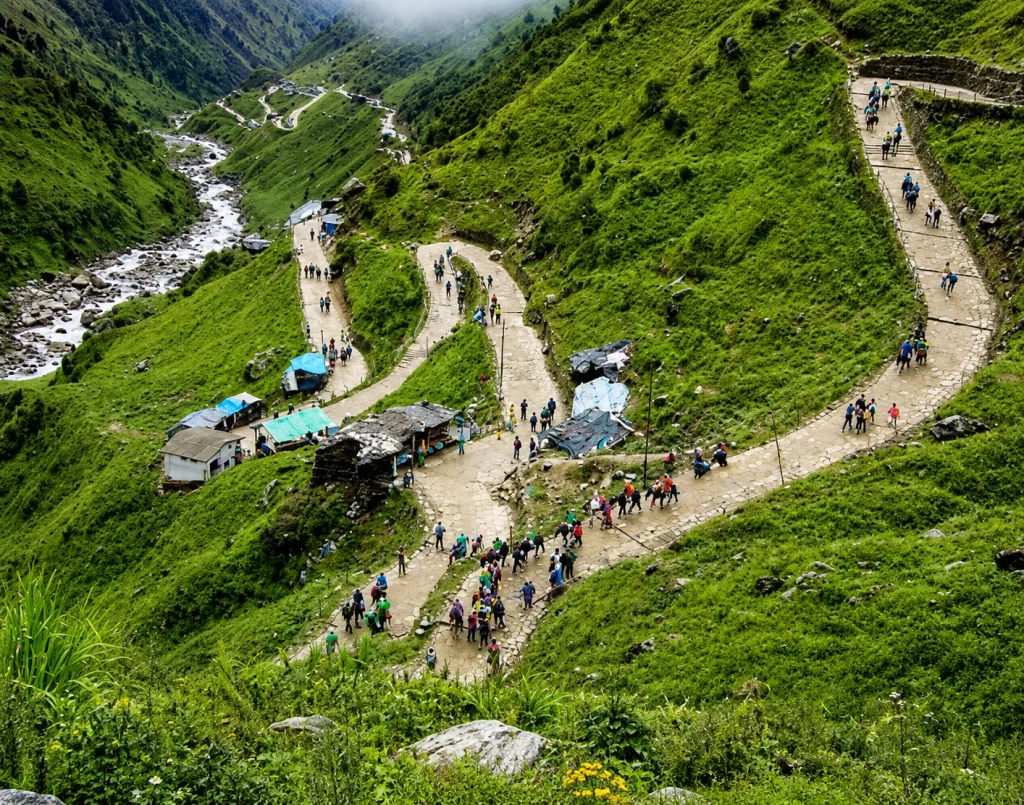
At roughly 3,293 metres, Yamunotri marks the sacred source of the Yamuna. Barkot is the usual base, and the road runs to Janki Chatti, from where the temple is about 6 km on foot. The paved path climbs steadily and stays damp, so grip footwear matters. Ponies and palkis run from official counters.
Gangotri
Gangotri, at around 3,100 metres on the Bhagirathi, honours the goddess Ganga. The road reaches the temple, which makes it the easiest of the four for seniors and young children, with Uttarkashi as the base. The altitude is still real and mornings are cold.
Kedarnath
Kedarnath, at roughly 3,583 metres, is a Jyotirlinga of Lord Shiva and the most demanding dham. Vehicles stop at Sonprayag, where shuttles run to Gaurikund. From there the temple is about 16 km uphill, usually six to eight hours one way, on a paved path with rest points and medical posts in season. Ponies, palkis and helicopter services are available, though heli operations and fares change every season.
Badrinath
Badrinath, at about 3,133 metres in Chamoli district, is dedicated to Lord Vishnu and is motorable to the temple town, which suits mixed age groups. Tapt Kund lies below the temple and Mana village is a short drive beyond.
Hemkund Sahib Is a Separate Sikh Pilgrimage
Hemkund Sahib is not one of the four Char Dham temples. The gurudwara stands at about 4,329 metres beside a glacial lake in Chamoli district and is associated with Guru Gobind Singh Ji. It welcomes visitors of all faiths, and langar is served in the Sikh tradition.
The approach begins at Govindghat on the Badrinath highway, which is the only reason the two journeys sit close together. The shrine is roughly 19 km one way: about 13 km to Ghangaria, then a steep 6 km climb. No overnight stay is possible at the top, so pilgrims start early and descend the same day.
Char Dham vs Hemkund Sahib
| Factor | Char Dham Yatra | Hemkund Sahib |
| Tradition | Hindu | Sikh, open to all |
| Walking | 6 km and 16 km treks | 13 km, then a steep 6 km climb |
| Highest point | About 3,583 metres | About 4,329 metres |
| Season | Roughly May to late October | Late May to early October |
Best Time to Plan Uttarakhand Pilgrimage Tours
Char Dham portals traditionally open around Akshaya Tritiya in late April or early May and close near Diwali. Hemkund Sahib opens later and closes earlier because of its altitude. Dates are announced fresh each year, so verify them before booking.
May and June bring clear weather and heavy crowds. July and August carry monsoon landslide risk. September and October are quieter, with sharper views and colder nights. Shrines close from November to April.
Registration and Travel Requirements
Registration is mandatory and free for Char Dham pilgrims, and the government issues a QR coded yatra e pass checked along the routes. Register at registrationandtouristcare.uk.gov.in or through the Tourist Care Uttarakhand app. Offline counters run in season at Haridwar, Rishikesh, Barkot, Hina, Sonprayag and Pandukeshwar, with one at Govindghat for Hemkund Sahib.
Carry photo ID for everyone and keep the e pass saved offline. Pilgrims above 50 with existing heart, blood pressure, diabetic or respiratory conditions may be asked for medical documentation, and route rules can change at short notice.
Transportation and Route Planning
Jolly Grant Airport near Dehradun is about 35 km from Haridwar, the practical rail head, which sits roughly 220 km from Delhi by road. Barkot, Uttarkashi, Guptkashi, Joshimath and Govindghat are the working bases, usually covered by private vehicle with an experienced hill driver. Avoid fixed timings, because travel time varies with weather, roads, traffic and restrictions.
Accommodation Planning
Choice narrows as you climb, and Kedarnath, Badrinath and Ghangaria have limited, simple stock that fills early. Where you sleep is a routing decision: Guptkashi sets up an early Kedarnath start, and Ghangaria is the only base for Hemkund Sahib.
Health, Altitude and Safety
Prepare with several weeks of walking, including incline work. Keep a slow pace, drink water often and dress in layers. Headache, nausea, breathlessness at rest or dizziness are signals to stop, rest and descend if they do not settle. Anyone with a cardiac, respiratory, blood pressure or diabetic condition should consult a doctor first.
Check weather and road status each morning, follow official advisories, travel in daylight, avoid shortcuts and keep buffer days in any plan.
Responsible Pilgrimage Travel
Carry your waste back down, refill water instead of buying single use plastic and stay on marked paths. Respect temple and gurudwara customs, dress modestly and observe photography rules. Using local shops and porters keeps income in communities working a short season.
Suggested Pilgrimage Itineraries
Short trip. Two to three days across Haridwar and Rishikesh with no trekking, or five to six days for a Do Dham journey to Kedarnath and Badrinath.
Full Char Dham. Roughly 10 to 12 days from Haridwar: Barkot for Yamunotri, Uttarkashi for Gangotri, Guptkashi for Kedarnath with a recovery day, then Badrinath via Joshimath. Anything shorter compresses both treks and the longest drives.
With Hemkund Sahib. Add three to four days. After Kedarnath, base at Govindghat, trek to Ghangaria overnight, climb to the gurudwara and return the same day, then continue to Badrinath. Two things decide this: the seasons overlap only partly, and one body must manage both climbs.
Guidance by Traveller Type
Families. Judge the walking by the least mobile member. Yamunotri suits children who walk well, and Kedarnath needs a real decision.
Couples. An extra night at Uttarkashi or Joshimath turns a rushed circuit into a journey.
Senior citizens. Take medical advice, choose an itinerary with a rest day, and use ponies, palkis or a Kedarnath helicopter transfer.
First time pilgrims. Register before leaving home, pack layers, rain gear, grip shoes and cash, and keep flexible days in the plan.
Quick Answers
Is Uttarakhand good for pilgrimage tours?
Yes. The state holds the four Char Dham temples, Hemkund Sahib and the spiritual centres of Haridwar and Rishikesh. Routes are established, transport and stays exist along the way, and journeys can be planned around different fitness levels.
What are the four Char Dham temples in Uttarakhand?
Yamunotri, Gangotri, Kedarnath and Badrinath, all in the Garhwal Himalaya. Yamunotri and Gangotri mark the sacred sources of the Yamuna and Ganga, Kedarnath is a Jyotirlinga of Shiva, and Badrinath is dedicated to Vishnu.
Is Hemkund Sahib part of Char Dham?
No. Hemkund Sahib is a Sikh pilgrimage site at about 4,329 metres in Chamoli district, associated with Guru Gobind Singh Ji. It has its own route and season, though its trailhead sits on the Badrinath road.
What is the best time for Char Dham Yatra?
May to June and September to October are the preferred windows. May and June bring clear weather with heavy crowds, while September and October are quieter with sharper views and colder nights. Monsoon months carry landslide risk.
How difficult is the Hemkund Sahib trek?
It is demanding. From Govindghat it is roughly 19 km one way, about 13 km to Ghangaria followed by a steep 6 km climb. There is no overnight stay at the shrine, so pilgrims return to Ghangaria the same day.
What should I pack for a Char Dham Yatra?
Warm layers and a jacket for cold nights, rain protection, grip walking shoes, a torch, a power bank, cash, personal medication with prescriptions, government photo ID, your yatra e pass and modest clothing for temple visits.
Can senior citizens undertake Uttarakhand pilgrimage tours?
Many do, with planning. Gangotri and Badrinath need no trekking, ponies and palkis serve Yamunotri, and helicopter services operate for Kedarnath when weather allows. Medical advice, rest days and a slower pace are essential.
Frequently Asked Questions
How many days are needed for Char Dham?
About 10 to 12 days from Haridwar. Do Dham takes five to six, and Hemkund Sahib adds three to four more.
How difficult are the walking sections?
Yamunotri is about 6 km each way and Kedarnath about 16 km. Gangotri and Badrinath need no trek.
Can families travel to Char Dham and Hemkund Sahib?
Families do Char Dham regularly with assistance on the treks. Hemkund Sahib is harder, because the final climb is steep and high.
Is registration needed for Hemkund Sahib too?
Govindghat has a registration counter for Hemkund Sahib pilgrims. Check the official portal before travelling, since rules change between seasons.
How should I plan transportation?
Reach Haridwar, Rishikesh or Dehradun by train, air or road, then travel by private vehicle with an experienced hill driver.
Decide whether you want the full circuit, a shorter Do Dham journey or Hemkund Sahib, then match it to the season and to the fitness of your group. If you would rather have routing, permits, vehicles and stays handled locally, Explore Uttarakhand Holidays plans customised pilgrimage journeys from Haridwar.